


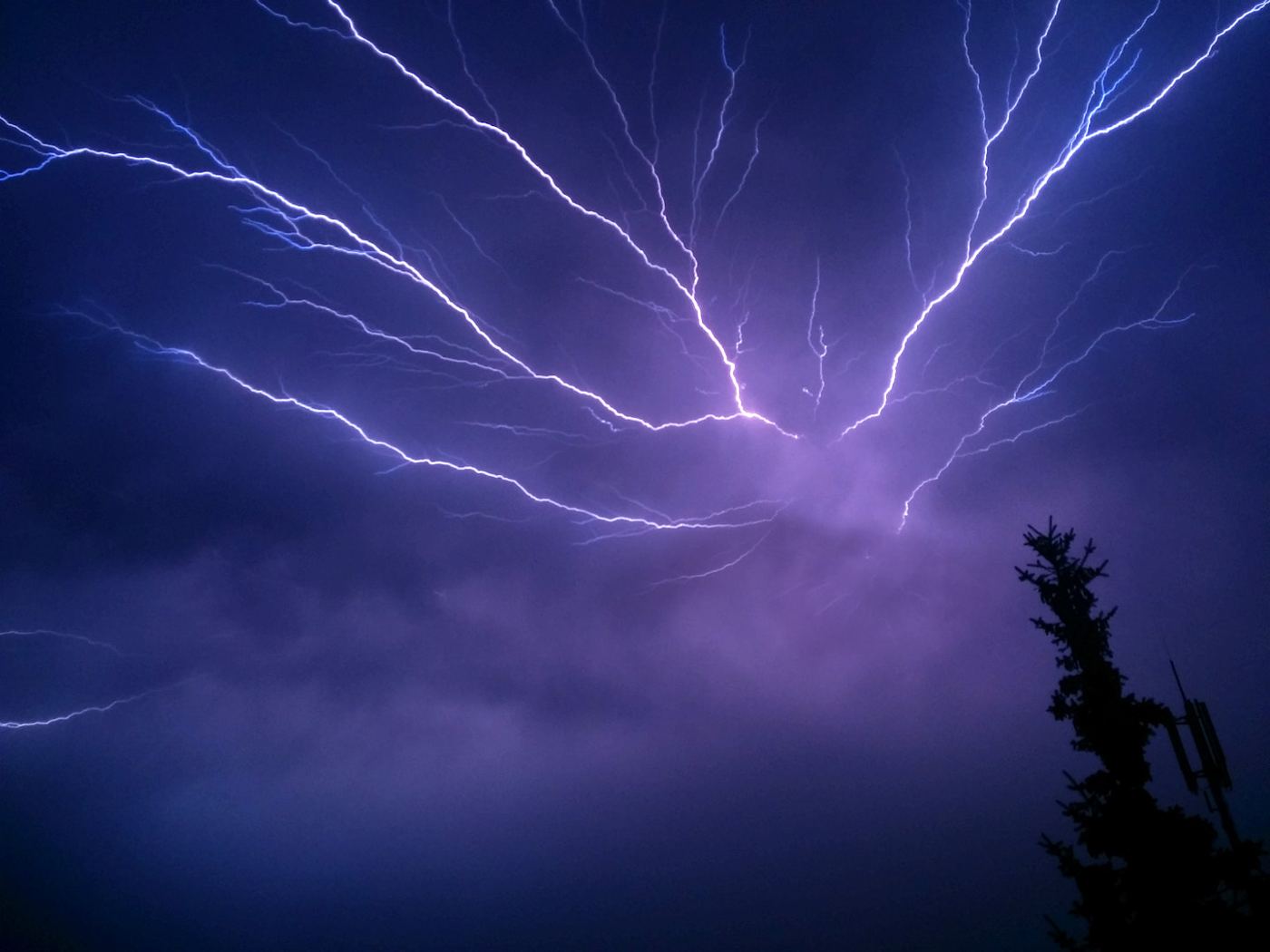
Winter thunderstorms behave differently from their summer counterparts, producing fewer but sometimes stranger lightning flashes in shallower clouds driven by cold-season fronts and coastal winds. A recent field campaign set out to map that lightning in three dimensions, deploying networks of radio sensors that record the tiny pulses emitted as a flash develops, step by step, inside the cloud. Combined with weather radar, the maps show channels branching through regions of ice crystals and supercooled water, revealing how charge separates in storms that lack the towering updrafts of summer. Winter flashes also more often strike the sea, tall structures and wind turbines, and a larger share carry strong positive charge, which can be especially damaging. Understanding where those flashes initiate helps explain the risk to coastal infrastructure during the stormiest months. The campaign deliberately ran through the least convenient weather of the year, with instruments icing up and field teams working short, cold days to keep the sensor network calibrated and complete.
What the Evidence Shows
Beyond the immediate hazard questions, winter lightning data help test the electrical models embedded in weather and climate simulations. Most lightning schemes were tuned on summer continental storms, so cold-season maritime storms provide an independent check on whether the physics generalises. The three-dimensional maps also show how often flashes escape the cloud sideways or upward, information used to improve detection networks that locate strikes for power utilities, aviation and emergency services. Each accurately located flash improves nowcasting systems that warn of intense rain and damaging gusts arriving with the same storm. Researchers are additionally comparing lightning patterns with measurements of ice and graupel inside the clouds, since collisions between those particles are thought to drive the charging process itself. As winters warm and storm tracks shift, the boundary between summer-style and winter-style thunderstorms may move, changing lightning risk in regions unaccustomed to it. Campaigns like this one provide the baseline observations needed to notice that change early and describe it credibly. Reporting and analysis from sources such as NASA track the same developments, and specialists following lightning mapped inside winter thunderstorm clouds say the direction is now consistent across independent lines of evidence.
The Wider Context
Funding bodies are watching lightning mapped inside winter thunderstorm clouds closely because the work sits at the junction of basic curiosity and practical return. Grant panels increasingly ask for a path from discovery to application, while researchers push back that the most valuable uses of fundamental science are rarely the ones written into the original proposal. The tension is productive when both sides stay honest about timescales.
What Happens Next
The long view on lightning mapped inside winter thunderstorm clouds is that fields advance by accumulation rather than by single announcements. This result adds a solid, checkable piece to a structure many teams are building, and its authors have shared their data so the piece can be tested from every side. That is how the picture eventually becomes reliable enough to act on. You can follow related developments in our coverage of science.
It is also worth remembering how quickly the picture in this area has changed before. Positions that looked settled a few years ago have been revised as new data arrived, and the same humility is appropriate now. The strongest coverage of this subject, and the most useful advice, tends to come from sources that update their views openly when the facts move, rather than defending an earlier position long after it has stopped fitting the evidence available.
